 Here at the UK ATC, we are leading the development of the observatory software for the SKA Observatory (SKAO). This suite of tools will be used by the astronomy community and SKAO staff to propose, design, schedule and execute observations on what will be the world's largest radio observatory.
SKAO has its global headquarters at Jodrell Bank in Cheshire and consists of two telescopes: SKA-Low in Australia and SKA-Mid in South Africa. Each telescope is an array of antennas spread across a very large area (for SKA-Low, the antennas will be separated by up to 65 km) and the signals from each are combined using interferometry.
Both telescopes are now reaching an exciting and important period of commissioning, with increasing numbers of antennas being integrated into the arrays. SKA-Low currently has 13 stations — sets of 256 antennas grouped in the Shire of Murchison region in Western Australia — with more rapidly coming online.
The commissioning scientists are working to characterise the telescope's performance and need to be able to perform and track repeatable observations. At the same time, Science Operations are looking ahead to the call for Science Verification Ideas next year and are working to get the processes and tooling in place to support that.
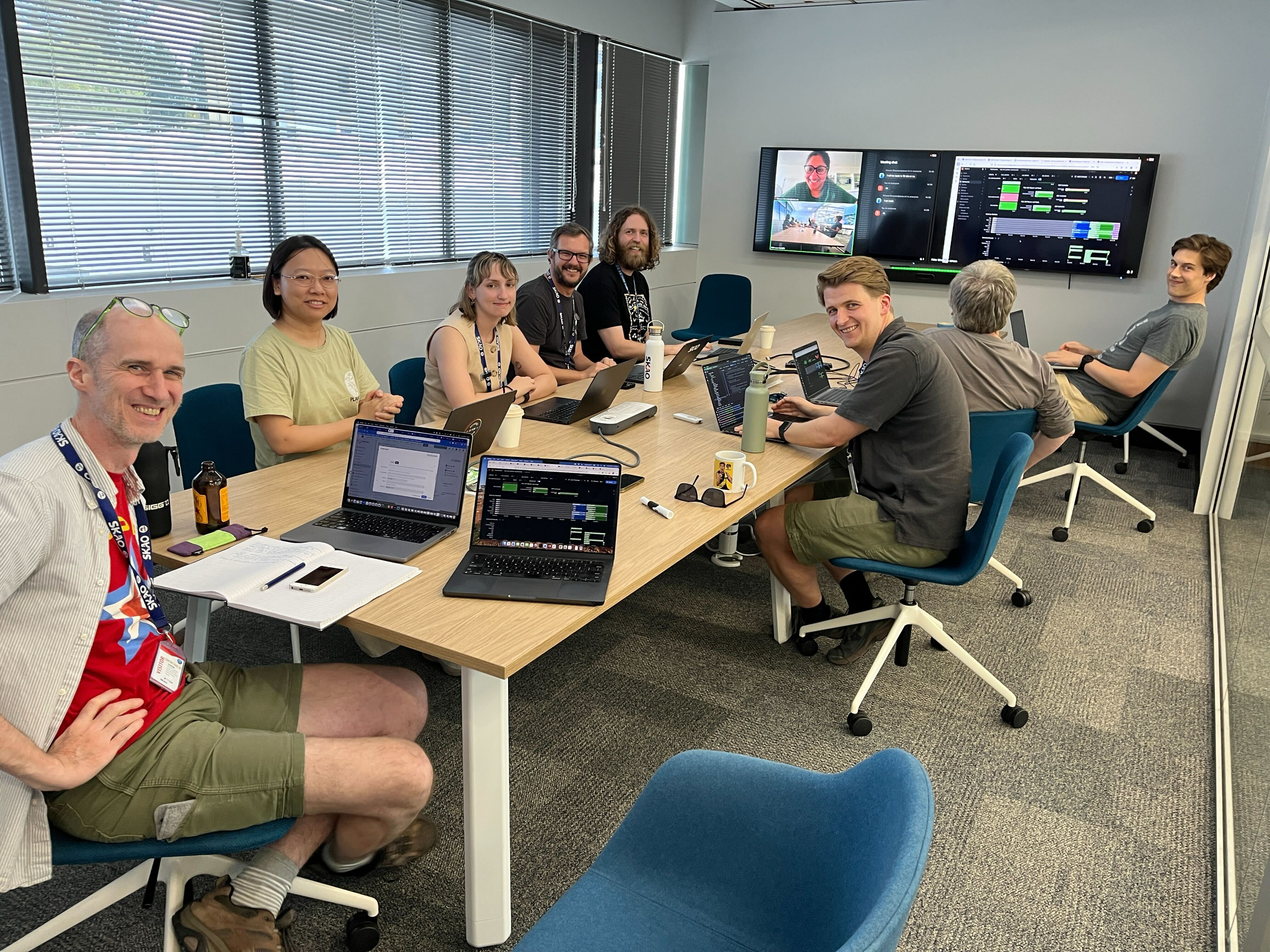
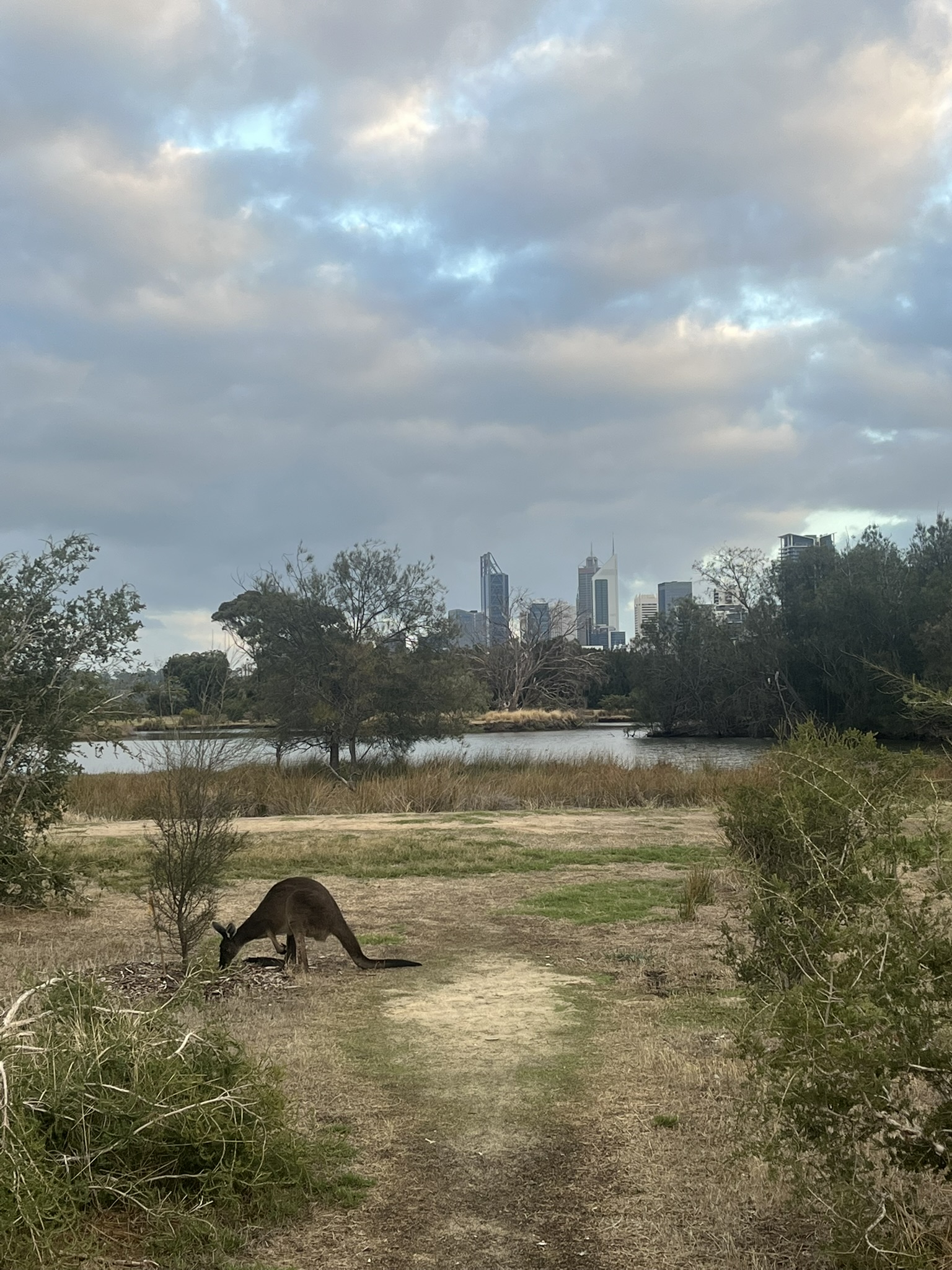
Before Easter we travelled to visit the SKAO offices in Perth, Australia. This is where SKA-Low is operated from and where the commissioning scientists and operators who will be using our tools are based.
 The aim of this trip was to enable better usage of the observatory tools, build relationships with our users and stakeholders and gain a shared understanding of the operational roadmap.
We arrived slightly jet-lagged, but excited to get started. We were welcomed into the office of Team Vulcan, the software Assembly, Integration and Verification team in which we were embedded during our three-week trip, and got ourselves set up at our desks. Throughout the first day we had many introductions and catch-ups with different people in the office, meeting lots of people who we had only known over Slack or Zoom up till then, including a member of the Monitor, Control and Calibration System team, who was visiting Perth at the same time.
The first highlight of the trip came through collaboration with the commissioning scientists and culminated in a Friday afternoon observing session where we showed them how to use our software to successfully perform observations on the real telescope.
Having worked for several years on the tools with only simulated telescopes and imagined users, this felt like a real milestone for us to be sat in Australia seeing users generate real data.
Throughout the rest of the trip we had several more sessions, both using the current tools to perform observations and discussing future use cases. While working on SKAO remotely does work well, there is so much value in being able to discuss technical issues in-person in front of a white board.
We were able to prototype versions of the software for the users to see, listened to their feedback and then adapted the design to best meet their needs. Sharing an office with Team Vulcan was great, and we were able to quickly work through several technical tasks that each would have normally taken days of messaging back and forth across time zones.
The final slice of our time was spent with Science Operations, discussing how we can support the telescope's operational needs both during this commissioning phase and beyond. This involved several software demos and detailed conversations about the operational model for the telescope, including how Key Science Projects will flow through the system and what needs to be in place ahead of Science Verification.
When developing observatory software from Edinburgh, the physical telescope can sometimes feel a little abstract — being in Perth, surrounded by people troubleshooting hardware, discussing cable runs and antenna deployments — makes it all feel much more real.
We sadly didn't make it to the actual telescope site due to Tropical Cyclone Narelle, but still came away feeling more connected to the project and with a greater understanding of how everything fits together. Meeting everybody in person will result in a sustained improvement in communication and collaboration once we are back to working remotely.
We headed back to Edinburgh feeling like we had achieved, shared and learnt a great deal over the three weeks. As the SKAO moves closer to delivering cutting-edge science, these kinds of visits will prove their worth both in terms of the work that we do in person and the shared understanding and relationships that help us going forward.