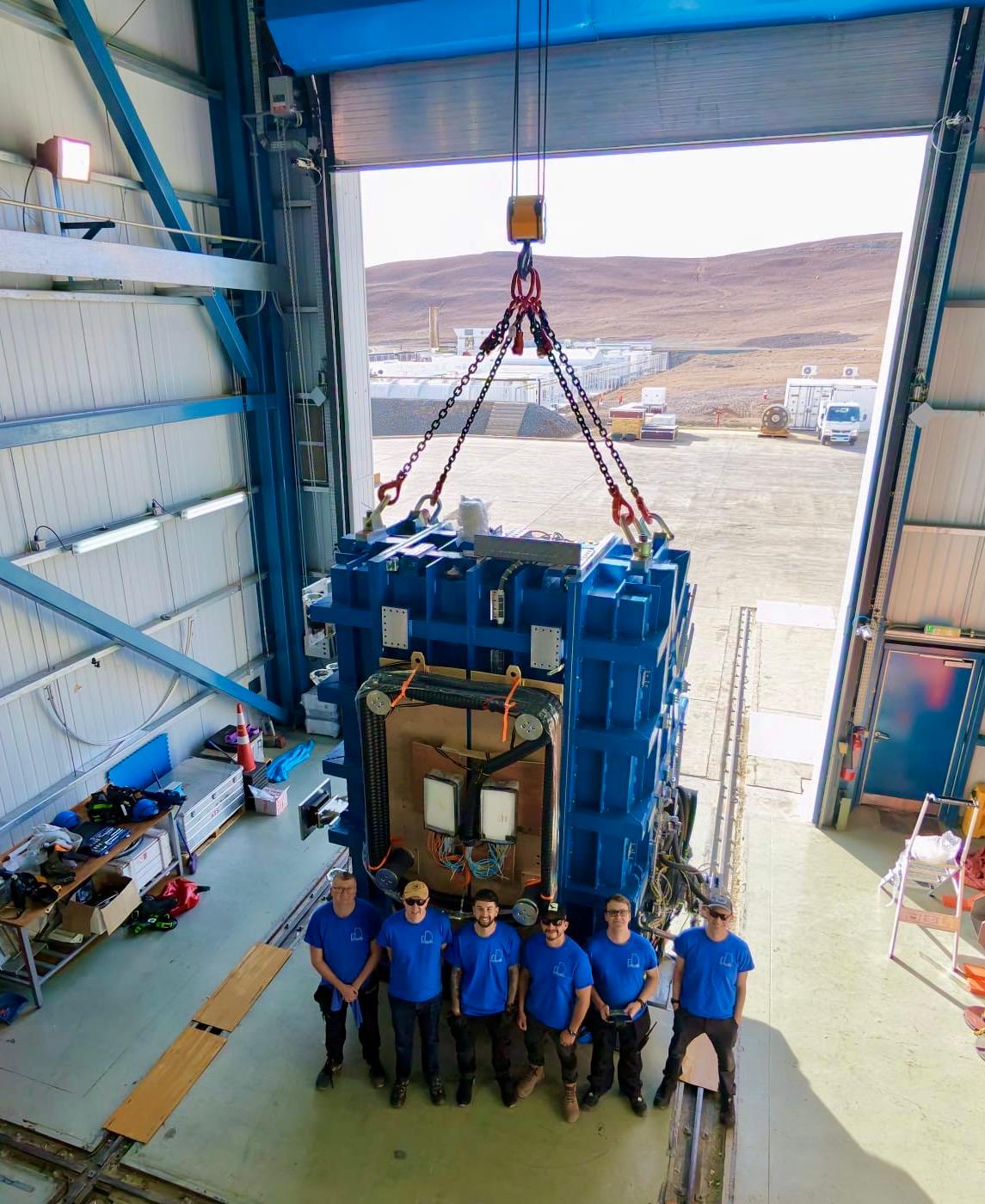
 MOONS (the Multi‑Object Optical and Near‑infrared Spectrograph) has now arrived safely at the European Southern Observatory's (ESO) Paranal site in Chile. A key stage on its path toward first light later this year.
Built by an international consortium led by UK ATC, MOONS left Edinburgh in December 2025 for its 31 day, 7,000‑mile sea voyage from Southampton, across the Atlantic, through the Panama Canal to Chile.
The largest, most complex astronomy instrument ever built in the UK, standing 4.5 metres tall and weighing around 10 tonnes, MOONS was transported in 15 custom‑made containers.
After arriving at Iquique in Chile on 12 January, the instrument was hauled 350 miles by road to ESO's Very Large Telescope mountaintop site. The UK ATC team have now opened all the boxes and checked all the components arrived safely after their long journey. The team is now installed in the Paranal New Integration Hall and are preparing to perform a full functional verification before moving to its final location: the Nasmyth platform in UT1 of the Very Large Telescope. After this five‑month integration and commissioning phase, MOONS will begin scientific operations later this year.
MOONS will be able to observe 1,000 celestial objects at once, capturing optical and near‑infrared light to probe the formation and evolution of galaxies across cosmic time.
Martin Black, Systems Engineer at UK ATC, said: "Seeing MOONS arrive safely in Chile is a
big relief for all of us who have worked on this for so long, and marks the
start of an important new phase of the project. This instrument has been years
in the making, and knowing that we are now approaching the final stages of
preparing MOONS to open a new window on the Universe is very exciting
for the whole team.”