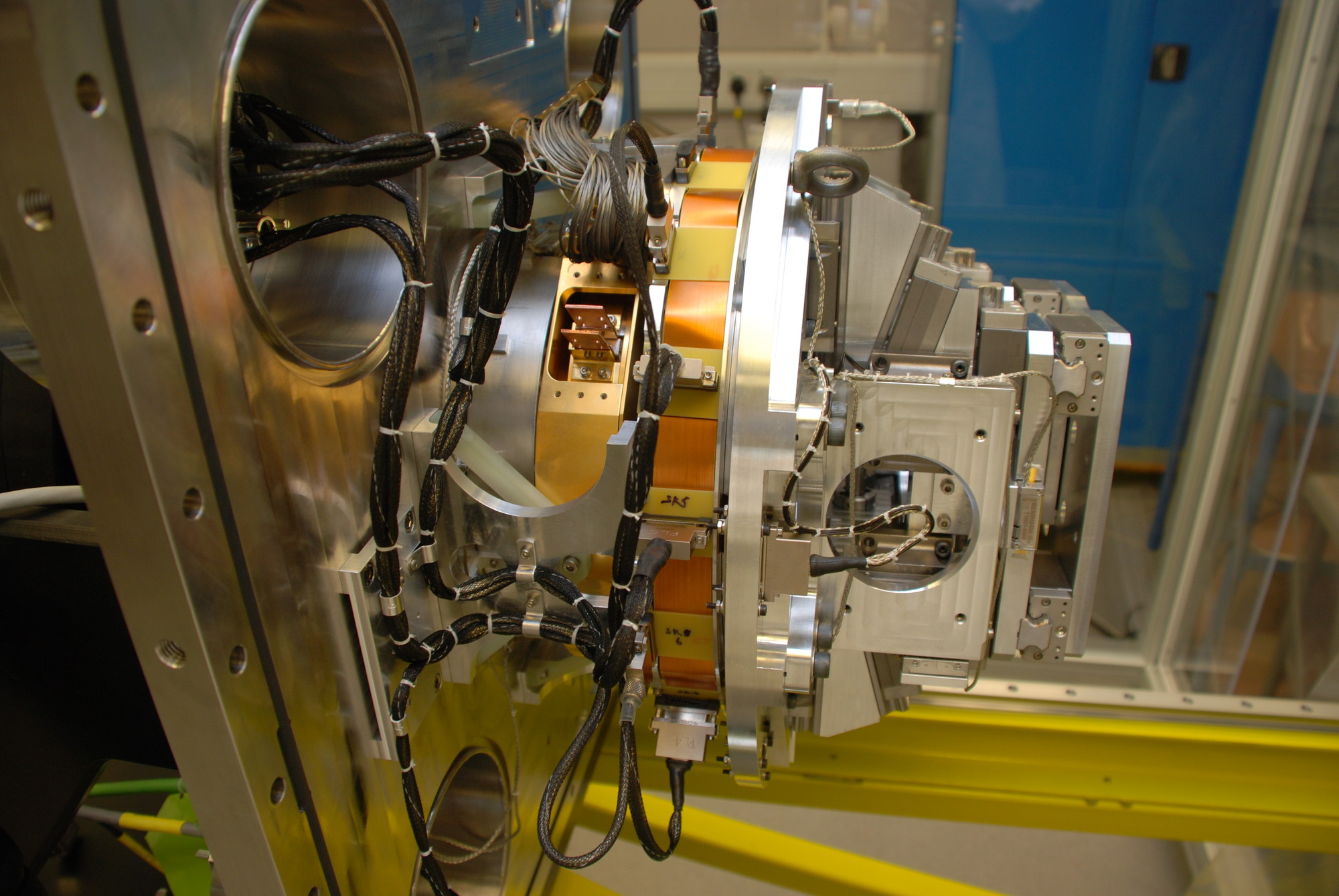
 The Diamond Light Source is the UK's national synchrotron light source funded by UK Research & Innovation (UKRI) and the Wellcome Trust. The facility produces very bright light at wavelengths from x-ray to infrared. This is used for high precision studies of the structure and properties of matter. The samples under study need to be rotated precisely, which is done using an instrument called a goniometer. For some cases this needs to be done in a vacuum at extremely cold temperatures.
This is where the UK ATC team was able to help out. Astronomical detectors are often designed to work in similar conditions, and the expertise of the UK ATC engineers enabled them to build a device capable of cooling a sample to temperatures as low as -240°C in a vacuum. This was a key component in enabling Diamond Light Source to create their unique Long-Wavelength Macromolecular Crystallography beamline.
The capability provided by this instrumentation has enabled a variety of breakthroughs. A particular highlight is the study of a bacterium that feeds on plastic waste. The precision of the goniometer made it possible to determine the structure of the enzymes used to break down plastic. These enzymes can then be reproduced and used at plastic recycling plants.
Find out more.