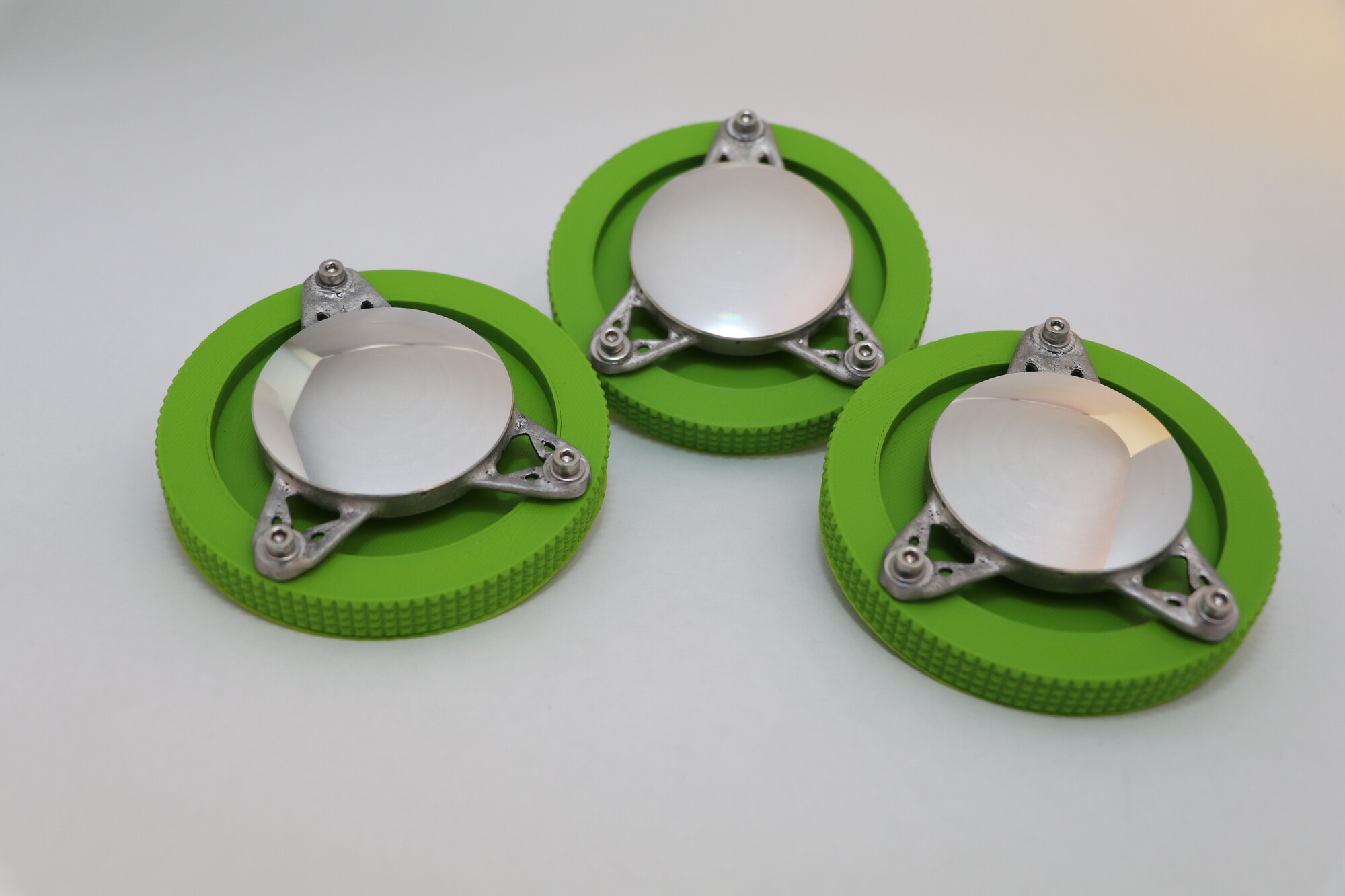
 Researchers at the UK Astronomy Technology Centre (UK ATC) in Edinburgh have taken an important step towards making high quality, lightweight mirrors produced by metal 3D printing a reality for future space missions.
This paper has its origins in a 2024 Summer Student project run by the University of Edinburgh's (UoE) School of Engineering. The initial student-led research provided the first clues that contamination in the printing process might be responsible for the microscopic scratches seen in aluminium space mirrors, paving the way for the fuller study published today.
In a new paper published in Engineering Research Express, the UK ATC and UoE team led a detailed investigation into why tiny scratches often appear on 3Dprinted aluminium mirrors during precision finishing. These scratches, though microscopic, can seriously degrade optical performance and have limited the wider use of additive manufacturing for space grade mirrors.
By studying mirrors manufactured across multiple projects, printers and suppliers, the researchers showed that each scratch could be traced back to minute contamination particles embedded in the metal during the printing process. Using advanced electron microscopy and chemical analysis, the team identified aluminium oxide (a by‑product of aluminium 3D printing), as well as traces of other industrial metals such as titanium and stainless steel.
These particles are significantly harder than aluminium (aluminium oxide can exist in extremely hard crystalline forms, second only to diamond) meaning they can catch on diamond cutting tools and be dragged across the surface, leaving long scratches behind.
Crucially, the study goes beyond identifying the problem and sets out practical solutions. This includes using printers dedicated to a single material, reducing powder reuse, and enforcing rigorous cleanliness within production environments — all of which can significantly reduce contamination.
Helping pave the way for lighter, more affordable mirrors for satellites and telescopes.
Find out more.